Clean Energy
Delivering reliable renewable power, owned and managed by communities
Power That Lasts Only When Communities Own It
Many remote villages in Indonesia still lack reliable electricity, or depend on fuels that are costly and polluting. Where a power system does arrive, it can stop working when nobody in the community has been prepared to run, repair, and fund it
Climate change adds pressure. Shifting rainfall changes river flows, and households that rely on diesel or firewood carry both higher costs and higher emissions. Clean energy only lasts when the community owns and manages it
Clean Energy Built With Communities
SIDIA delivers Clean Energy as its own program, together with the communities who will use the power. We begin by listening to how a village uses energy today, then assess the site and design a system that fits it. Ownership and management by the community are planned from the start, not added at handover
The work is integrated with the other sub programs: power supports village enterprises, food processing, and early warning systems, and it depends on protected water sources. It is backed by our expertise in program design, MEL, training, and data. Our Strategic Advisor, Ms. Tri Mumpuni, brings more than two decades of community based renewable energy work to this sub program
What We Do in Practice
Clean energy that communities can own, operate, and maintain themselves
Activities
Micro Hydro in Depth
Feasibility, Design and Engineering
A careful look at whether a site can support a micro hydro plant, followed by the design and engineering that make it work. We study local water resources and community needs, then design a system that is reliable and suited to the place
P = ρ × g × Q × H × η
- ρWater density, 1,000 kg/m³
- gGravity, 9.81 m/s²
- QWater flow (m³/s)
- HHead, the height the water falls (m)
- ηOverall efficiency of the system
Q = 0.2 m³/s, H = 30 m, η = 0.6
P ≈ 35 kWSystem Installation and Maintenance
Building the system and keeping it running. We support installation and put maintenance arrangements in place, with clear responsibilities for the people who operate the plant, so it keeps delivering clean, reliable energy long after construction ends
- 1Operate
- 2Inspect
- 3Maintain
- 4Record
- 5Manage Fees
Community Capacity Building
Preparing the community to operate and benefit from its own power source. We build local skills and organization around the plant, so it strengthens livelihoods and economic resilience for years to come
How a Micro Hydro Power Plant Works
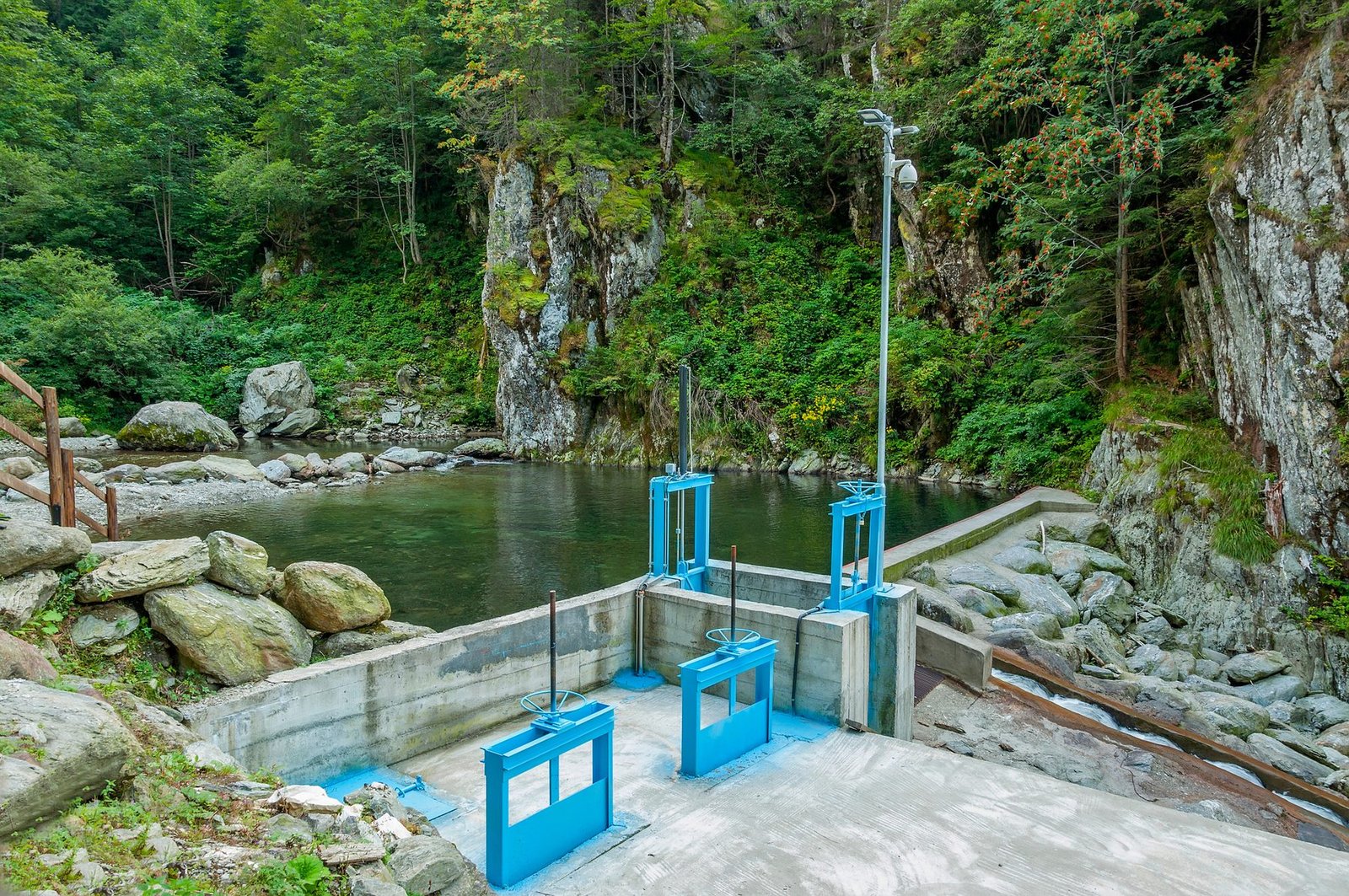
Water from a river is guided along a channel, drops through a pipe, and turns a turbine that generates electricity for the village
- 1Weir and IntakeDiverts part of the river flow
- 2Headrace ChannelCarries water along the contour
- 3ForebaySettles sediment and steadies the flow
- 4PenstockDrops the water to build pressure
- 5Turbine and GeneratorTurn falling water into electricity
- 6Village GridDelivers power to homes and businesses
Six Areas of Work, One Program
Reliable power is the base for village enterprises and food processing, and it keeps early warning systems running. It also depends on protected forests and water sources. Energy projects in Indigenous communities stay within this sub program, while rights, territories, and customary institutions are handled under Indigenous Peoples
Village Economy & Enterprise
Turning local potential into real income for communities
Learn moreFood Security & Agriculture
Helping farmers increase yields in sustainable, climate resilient ways
Learn moreIndigenous Peoples
Working alongside Indigenous communities, respecting their rights, territories, and customary institutions
Learn moreDisaster Risk Reduction
Preparing communities for floods, landslides, droughts, and extreme weather
Learn moreEnvironment & Nature Conservation
Protecting the forests, water sources, and coastlines that sustain community life
Learn moreSkills That Support Every Sub program
Every sub program is backed by the same four areas of expertise
Impact Program Design
Designing programs from the ground up, with Theory of Change, stakeholder analysis, budgeting, and measurement in one plan
Learn moreMonitoring, Evaluation & Learning (MEL & SROI)
Independent evaluation based on OECD DAC criteria, with SROI analysis to prove and improve impact
Learn moreTraining & Capacity Building
Targeted training for community managers, operators, and partner organizations
Learn moreData & Digital Innovation
Dashboards, applications, and data systems that make impact visible and decisions evidence based
Learn moreStories From the Field
Coming soon
Case studies from this sub program will be shared here
Let's Build Climate Resilience Together
Whether you are a donor, government agency, business, or community organization, SIDIA is ready to talk about how this work could fit your program