Village Electricity and Micro Hydro (PLTMH) in Indonesia: The Latest Data and What It Means for Programs
The electrification ratio is close to 100%, yet thousands of villages are still not connected to PLN. A summary of official data on village electricity, untapped micro hydro potential and the fate of the plants already built
Key Points
- The national electrification ratio was about 99.83% at the end of 2024, but the 2025 to 2029 Village Electricity Program still targets 5,758 villages without PLN power and about 1.2 million households
- In 2025 the Village Electricity Program brought power to 77,616 households at 1,516 locations, or about 6.5% of the five year target
- RUEN records 19,385 MW of mini and micro hydro potential, while small scale hydro capacity in 2024 was about 1,009 MW
- There is no reliable national record of how many PLTMH exist and how many still operate, so monitoring data is the main gap to close
On This Page
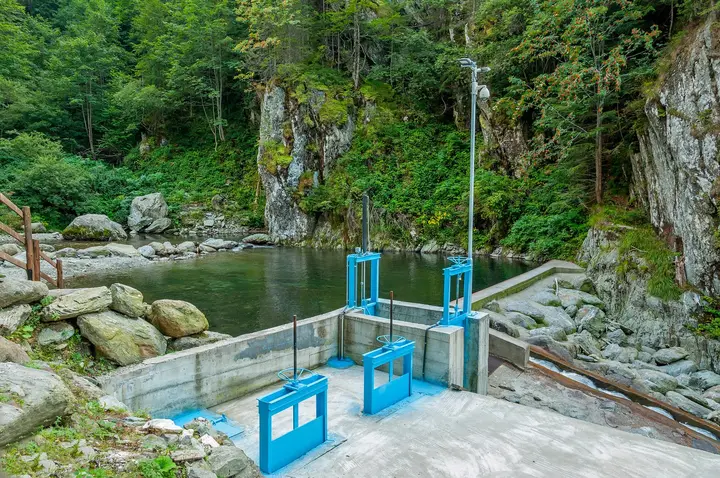
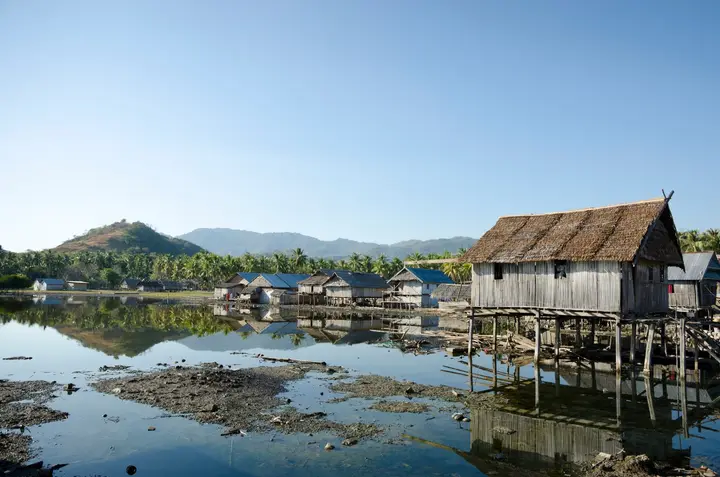
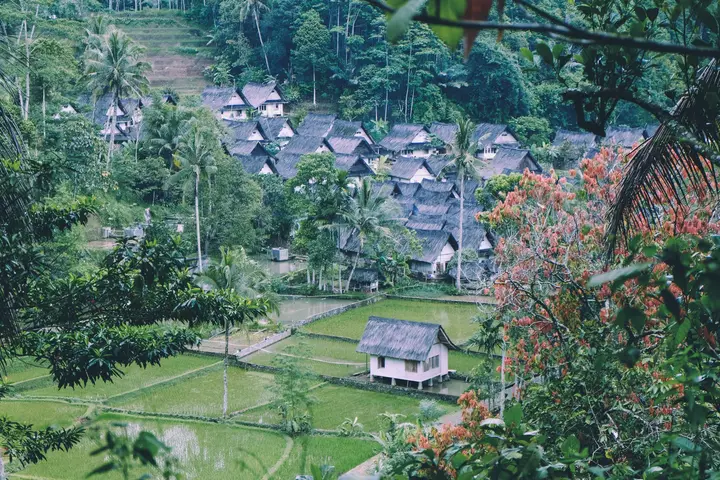
Almost every household in Indonesia is now recorded as having electricity, but village electrification is not finished. The Ministry of Energy and Mineral Resources (ESDM) still targets thousands of villages that are not connected to the PLN grid, most of them in remote areas that power lines struggle to reach. In such places, a PLTMH (pembangkit listrik tenaga mikrohidro, or micro hydro power plant) is often the choice because it uses the local river
This article summarizes SIDIA Research No. 03, a review of published data on three questions: how many villages are still waiting for electricity, how much of the small scale hydro potential has been used, and what is known about the fate of the micro hydro plants already built. The full report can be downloaded as a PDF in Indonesian
Electrification Is Almost Complete, but Thousands of Villages Lack PLN Power
ESDM calculates the electrification ratio as the number of households with electricity divided by the total number of households. It rose from 98.89% in 2019 to about 99.83% at the end of 2024
| Year | Electrification Ratio | Source |
|---|---|---|
| 2019 | 98.89% | ESDM Performance Report 2019 |
| 2021 | 99.45% | ESDM press release, January 2022 |
| 2023 | 99.78% | ESDM press release, January 2024 |
| 2024 | about 99.83% | ESDM press release, September 2025 |
However, the ratio combines PLN and non PLN electricity. In 2023, for example, 98.32% of households received electricity from PLN and 1.46% from non PLN sources, including village plants. That is why, in September 2025, ESDM still named 5,758 villages without PLN power, with about 1.2 million households, as the target of the 2025 to 2029 Village Electricity Program
How Fast the Village Electricity Program Is Moving
According to ESDM, in 2025 the Village Electricity Program brought power to 77,616 households at 1,516 locations, and the New Connection Assistance program (BPBL) reached 205,968 households. Compared with the target of about 1.2 million households, the first year of the Village Electricity Program achieved about 6.5%. This is a rough calculation by SIDIA, because targets and results are not always counted on the same basis
The government aims to bring electricity to every village and hamlet by 2029. For remote areas, ESDM names the expansion of solar power plants as the off grid solution. The press releases we read do not mention micro hydro specifically
Micro Hydro Potential Is Barely Used
The National Energy General Plan (RUEN) in Perpres 22/2017 records 19,385 MW of mini and micro hydro potential, with 197.4 MW installed in 2015, or 1.0% of the potential. RUEN projected development to reach 3 GW by 2025 and 7 GW by 2050
More recent data shows progress, but still far from that projection:
- UNIDO recorded 543 MW of small scale hydropower (up to 10 MW) from 185 plants in 2020, about 3% of the potential
- The 2025 ESDM energy statistics handbook records 954.23 MW of mini hydro and 22.22 MW of micro hydro connected to the grid in 2024, plus 28.86 MW of micro hydro and 3.72 MW of mini hydro off the PLN grid
- Together the four come to about 1,009 MW, roughly a third of the RUEN projection for 2025 (SIDIA's calculation)
Each source uses a different definition. UNIDO uses a 10 MW limit, a 2023 historical review says micro hydro usually means 10 kW to just under 1 MW, and Perpres 112/2022 calls all of them hydropower plants (PLTA). The figures above should therefore be read as orders of magnitude, not compared exactly
How Many Micro Hydro Plants Are Still Running
This question cannot yet be answered with national data. A review by Rospriandana and colleagues (2023) states that there is no reliable record of the number of micro hydro systems in Indonesia. It cites a GIZ survey: 357 micro hydro units with a total of about 9.5 MW were built from 2009 to 2017 and served almost 38,000 households
The same review notes that some plants were abandoned when the PLN grid arrived, and finds that government projects often failed because they focused on output targets rather than sustainability and service quality. We cover the technical and management factors that keep a PLTMH running in our article on community owned micro hydro
Rules on Selling Power to PLN
Perpres 112/2022 sets the ceiling price for electricity from hydropower bought by PLN. For capacity up to 1 MW, the price is 11.23 US cents per kWh multiplied by a location factor in years one to ten, then 7.02 cents in years eleven to thirty. Plants built entirely by the central or regional government, including with grants, are priced at 3.76 US cents per kWh. Run of river plants up to 5 MW must also be able to operate at a capacity factor of at least 60%
For village micro hydro plants built with public funds, this lower price needs to be factored in from the start if the plan is to sell electricity to PLN once the grid arrives
This article is a general explanation of published data and regulations, not legal advice. Check the latest official text before making decisions
Conclusion
On paper, Indonesia's electrification is almost complete, but the remaining work lies in remote villages where costs are highest. Micro hydro potential is still large, while data on the plants already standing remains thin. For local governments, BUMN and donors, a sensible first step before building new plants is to map existing micro hydro plants, check which can still be restored and then monitor their operating hours
SIDIA's Renewable Energy program supports PLTMH feasibility and design, maintenance arrangements and capacity building for the communities that manage them
Frequently Asked Questions
What is Indonesia's current electrification ratio?
The Ministry of Energy and Mineral Resources (ESDM) puts the national electrification ratio at about 99.83% at the end of 2024. The figure counts households with electricity from PLN and from other sources, so it is higher than the share of households served directly by PLN
How many villages in Indonesia still lack electricity?
The ESDM Village Electricity Program for 2025 to 2029 targets 5,758 villages without PLN power, with about 1.2 million households. Some of these villages already use non PLN electricity, such as solar or micro hydro plants
What is the micro hydro potential in Indonesia?
The National Energy General Plan (Perpres 22/2017) records 19,385 MW of mini and micro hydro potential. Only 197.4 MW was installed in 2015, and RUEN projected 3 GW by 2025
Can a village micro hydro plant sell electricity to PLN?
Yes, with conditions. Perpres 112/2022 sets a ceiling price for hydropower up to 1 MW of 11.23 US cents per kWh multiplied by a location factor for years one to ten, but plants built entirely by the government or with grants are priced at 3.76 US cents per kWh
Sources
- Peningkatan Akses Listrik Desa Jadi Prioritas Pemerintah, Menjangkau 1,2 Juta Rumah TanggaKementerian Energi dan Sumber Daya Mineral (ESDM), 2025
- Jalankan Program untuk Rakyat, Realisasi Anggaran Kementerian ESDM Capai Rp13,19 TriliunKementerian Energi dan Sumber Daya Mineral (ESDM), 2026
- Kementerian ESDM Tuntaskan Program Elektrifikasi di Tahun 2024Kementerian Energi dan Sumber Daya Mineral (ESDM), 2024
- Peraturan Presiden Nomor 22 Tahun 2017 tentang Rencana Umum Energi Nasional (Lampiran I)Pemerintah Republik Indonesia (Kementerian ESDM), 2017
- Handbook of Energy & Economic Statistics of Indonesia 2025Pusat Data dan Teknologi Informasi, Kementerian ESDM, 2026
- World Small Hydropower Development Report 2022: South-Eastern Asia (Indonesia)UNIDO dan International Center on Small Hydro Power, 2022
- Over a century of small hydropower projects in Indonesia: a historical review (Rospriandana dkk.)Energy, Sustainability and Society, vol. 13, art. 30, 2023
- Peraturan Presiden Nomor 112 Tahun 2022 tentang Percepatan Pengembangan Energi Terbarukan untuk Penyediaan Tenaga ListrikPemerintah Republik Indonesia (JDIH Kementerian Keuangan), 2022
- Access to electricity, rural (% of rural population), Indonesia (EG.ELC.ACCS.RU.ZS)World Bank, World Development Indicators, 2026
Need Help With This?
Our team can help you design, measure, and report programs like the ones discussed in this article